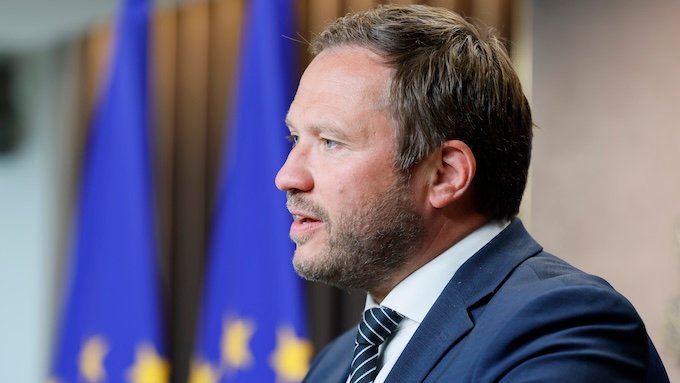
BALTIC AND RUSSIA – Interview to Margus Tsahkna, Minister of Foreign Affairs of Estonia
– How many Russian military drones have crossed the Baltics and Estonia in the first half of 2026?
There have been several incidents in 2026 involving drones entering the airspace of NATO countries, from Finland in the Nordic region down to Romania in the Black Sea region. These incidents have involved both Russian and Ukrainian drones.
Drones entering NATO airspace are in many cases the result of Russian electronic interference, such as the use of jamming systems. Regardless of their origin, such incidents are a direct consequence of Russia’s illegal war of aggression against Ukraine. The war has increased military activity, electronic warfare, and security risks across the wider region. This is why Estonia remains firmly committed to supporting Ukraine and maintaining political, economic, and diplomatic pressure on Russia in order to achieve a just and lasting peace in Ukraine and, ultimately, greater security throughout Europe.
Airspace violations and drone-related incidents have demonstrated that NATO monitors its territory closely and is prepared to act decisively to protect Allied airspace and sovereignty. These incidents also underline the importance of maintaining strong air defence, situational awareness, and close cooperation among Allies.
These incidents also demonstrate the importance of continued investment in air surveillance, air defence, and allied cooperation. The security environment around the Baltic Sea has been directly affected by Russia’s illegal war of aggression against Ukraine. NATO and Allies must remain vigilant and prepared to respond to any violations.
– Do the Russians have nuclear submarines positioned into the Baltic and Artic Sea?
Russia maintains naval bases and naval forces in both the Baltic and Arctic regions.
Its Arctic naval infrastructure plays an important role in Russia’s submarine operations and boarder nuclear deterrence posture.
– How many Russian-speaking citizens live in Republic of Estonia and the other Baltic countries? Are these citizens trying to integrate with the rest of the population?
In Estonia, people of Russian ethnicity make up approximately 21% of Estonia’s population.
According to the Estonian Integration Monitoring, integration into Estonian society has been a consistent and positive process. Over the past three decades, significant progress has been made in fostering a shared civic identity.
The Russian-speaking population in Estonia is not a homogeneous group. Younger generations are generally more integrated, more likely to speak Estonian fluently, and more connected to Estonian and European institutions than previous generations. Many Russian-speaking Estonians serve in public administration, the private sector, education, healthcare, and even Estonia’s defence structures. Among Russian-speaking residents—there are many committed and loyal Estonian patriots who actively contribute to society.
Recent trends have also demonstrated a growing distance from Russian state narratives. Studies show that the influence of Russian media among Estonia’s Russian-speaking population has declined significantly. In 2022, around 40% identified Russian media channels as their primary source of information; by September 2025, that figure had fallen to approximately 12%. At the same time, support for Estonia’s membership in NATO among Russian-speaking residents has increased substantially and has roughly doubled in recent years.
Estonia’s experience demonstrates that integration is a two-way process built on equal opportunities, mutual respect, and shared democratic values. For us, successful integration does not mean abandoning one’s cultural heritage. Rather, it means sharing a common civic space, a common commitment to democracy and the rule of law, and a common future within the Estonian state and the wider European community.
– Are there cultural programs that attempt to integrate different social groups?
Yes. Estonia has pursued long-term integration policies aimed at strengthening social cohesion through language learning, education, cultural participation, equal opportunities, and civic engagement. Even before the Second World War, the Republic of Estonia granted cultural autonomy to national minorities, allowing different ethnic groups to preserve and promote their culture with the support of the state.
One of the central principles of Estonia’s integration policy is that diversity and mutual respect strengthen society rather than weaken it. Programmes under the broader Cohesive Estonia framework seek to bring together people from different linguistic, ethnic, and social backgrounds while fostering a shared sense of belonging and a common civic identity.
A particularly important reform currently underway is Estonia’s transition to Estonian-language education. The goal is to create a unified education system that provides all children—regardless of their linguistic or ethnic background—with the best possible education and equal opportunities for further studies and future careers. We believe that a common educational space helps strengthen social cohesion while ensuring that every young person has the skills needed to succeed in Estonia and Europe.
Integration efforts extend well beyond schools. Cultural projects, youth exchanges, local community initiatives, sports activities, volunteer programmes, and civic engagement projects encourage interaction between different communities and help build trust, mutual understanding, and a stronger sense of belonging.
Recent research suggests that these efforts are producing results. The influence of Russian state media among Estonia’s Russian-speaking population has declined significantly in recent years. At the same time, support for Estonia’s democratic institutions, European integration, and NATO membership has increased, reflecting a stronger identification with Estonia and a growing sense of belonging to the wider European community.
Estonia’s goal is not assimilation but integration: preserving cultural diversity while building one cohesive society based on shared democratic values, equal opportunities, and loyalty to the constitutional order of the Republic of Estonia.
– What risks and offenses have Russia posed to Estonia and the Baltics in the past?
The greatest long-term threat Russia has posed to Estonia, the Baltic States and Europe more broadly stems from its repeated disregard for international law and the sovereignty of its neighbours.
A clear historical example is the illegal occupation and annexation of Estonia, Latvia and Lithuania by the Soviet Union during and after the Second World War. The Western democracies, including Italy, never recognised this occupation de jure. The restoration of the independence of the Baltic States in 1991 confirmed the continuity of our statehood and the illegality of the occupation.
Unfortunately, we are witnessing the same disregard for international law today. Russia’s full-scale war of aggression against Ukraine, now continuing for several years, demonstrates that Moscow remains willing to use military force to redraw borders and challenge the fundamental principles of the international order.
In addition to conventional military aggression, Russia has for man
In addition to conventional military aggression, Russia has for many years employed various forms of hybrid activities against NATO Allies and EU member states. These activities are designed to undermine Western unity, challenge the resilience of our societies, and weaken the rules-based international order.
Starting from Russia’s aggression Ukraine, Russia has intensified these efforts. As the situation on the battlefield in Ukraine is weakening, Russia has become more aggressive, using more hostile actions to try to undermine our support.
Russia’s hybrid activities can take many forms, including sabotage, acts of violence, migration pressure at borders, cyberattacks, electronic interference, GPS jamming, airspace violations, attacks against critical infrastructure, and coordinated disinformation campaigns.
These challenges affect Europe as a whole and the best response is vigilance, unity, and resilience. Our awareness of these threats, combined with strong cooperation within NATO and the European Union, gives us the tools to withstand and counter them effectively. We need to be resilient, while raising the cost of such actions for Russia and hindering Russia’s ability to carry these out.
– Sometimes peace can only be preserved by preparing for war. How much fear is there of an escalation of war between Baltics and Russia?
Our objective is simple: Russia must always calculate that any military aggression against NATO would fail and would come at an unacceptable cost. The stronger our deterrence, the less likely conflict becomes.
However, deterrence cannot be taken for granted. Russia continues to invest heavily in its military and is implementing reforms that could strengthen its armed forces over time. This is why Estonia, together with NATO Allies, must continue investing in defence capabilities, readiness, and collective deterrence.
As a NATO Ally, Estonia benefits from the Alliance’s collective defence commitment under Article 5. Any attack against one Ally is an attack against all. NATO has defence plans, troops, equipment, and capabilities in place, and Allied forces are permanently present in Estonia and across the Baltic region.
Therefore, while we take the security situation seriously and remain vigilant, Estonia does not live in fear. Our focus is on preparedness, resilience, and deterrence. History has shown that peace is best preserved when potential aggressors understand that aggression will not succeed.
– What can diplomacy do against war?
Diplomacy remains an essential tool for preventing and ending wars, but diplomacy is effective only when it is backed by principles, unity, and credibility.
Estonia has been a strong supporter of the common European approach towards Russia since the beginning of Russia’s full-scale invasion of Ukraine. This policy combines political and economic pressure on Russia, including sanctions and international isolation, with political, economic, humanitarian, and military support for Ukraine.
The purpose of this approach is to create the conditions for a just and lasting peace. Any sustainable peace must respect Ukraine’s sovereignty and territorial integrity, uphold international law and the principles of the UN Charter, and ensure that aggression is not rewarded.
Diplomacy also plays a crucial role in maintaining international unity. The stronger and more united the democratic world remains, the greater the pressure on Russia to choose negotiation over continued aggression. Ultimately, the goal is a secure and lasting peace in Ukraine and a stable European security order based on international law, sovereignty, and respect for the independence of all states.
– What would you like to say to those Italians and Europeans who these days, following Putin’s propaganda, think that the Baltic countries are provoking Russia?
Estonia stands for something very simple and deeply human: to protect life, the right to live free, to choose our own future, and to preserve our way of life.
I believe most Italians would say exactly the same if asked what matters most to them. We all want to live in a Europe where every country, regardless of its size, has the right to determine its own future without coercion, threats, or military aggression.
We believe this is not only our right, but the right of every nation in Europe and obligation of every government —from the north to the south, from the largest to the smallest. No country should ever be forced, threatened, or attacked for deciding its own path.
This is why we place such importance on the principles of international law, sovereignty, and territorial integrity. These are not abstract concepts for us. As a small country, our security depends on a rules-based international order in which borders cannot be changed by force and nations have the right to make their own choices.
We support Ukraine because Russia launched an unprovoked and unjustified war of aggression against a sovereign neighbour. If the use of force were accepted as a legitimate way to change borders, it would undermine the security of all European countries, including Estonia and the other Baltic States.
The Baltic countries do not threaten Russia. We do not seek confrontation. Our investments in defence and our commitment to NATO are defensive measures designed to prevent conflict, not to provoke it.
[riproduzione riservata – © alleo.it]